Tradimo – an online course platform for brokers
2024 – 2025
Sole Product Designer
I worked as the sole Product Designer in a team of five developers.
As the platform grew, my goal was to make learning easier to start, continue and explore.
When I joined, Tradimo already had a large library of courses, webinars and rewards.
The challenge was helping learners understand where to start, what to continue, and what to learn next.
As the sole Product Designer, I led the redesign from problem definition and research to prototyping, testing, and implementation support.
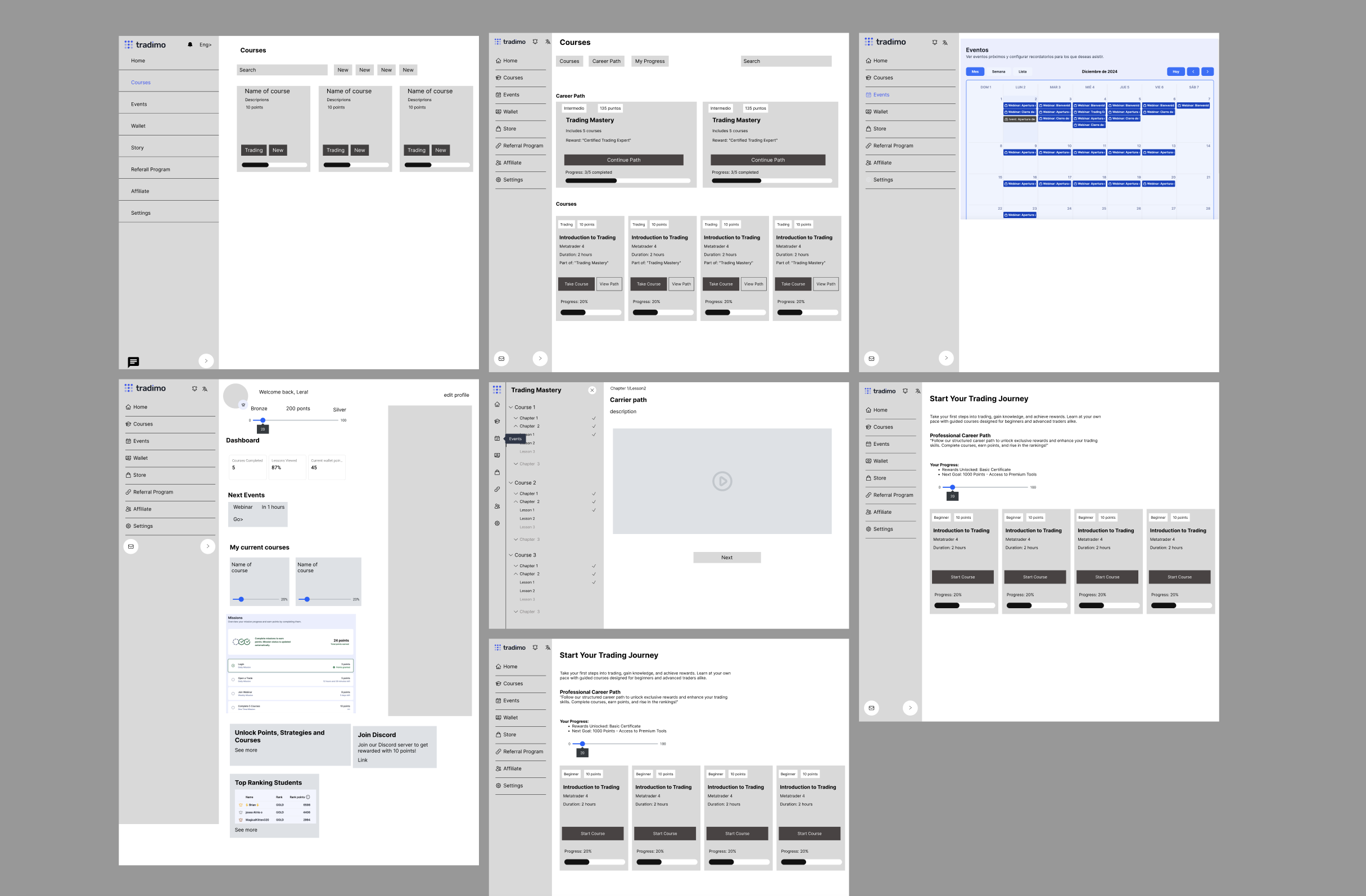
I reorganized the experience around three learner needs: start learning, continue progress, and discover the next relevant activity.
Average task completion time decreased by 30% across selected core journeys during usability testing.
Tradimo already had courses, webinars, rewards and other learning tools.
But as more content was added, users had more decisions to make. They did not always know where to start, how to continue an unfinished course, or which content matched their level.
So the challenge was not to add more. It was to make the existing experience easier to understand.
.png)
I combined user interviews, usability testing, journey mapping and an interface audit.
The research showed that the biggest friction appeared in three moments:
starting, finding the right content, and coming back to continue learning.

I mapped the experience from discovering a course to returning after a learning session.
This helped me see that many problems were connected. A confusing home screen affected activation, weak course information affected discovery, and disconnected webinars and rewards affected engagement.
.png)
Three priorities:
Start faster · Find relevant content · Keep learners engaged
Beginners needed more guidance.Returning learners wanted speed.
The redesign had to support both without forcing everyone through the same path.
The journey revealed many possible improvements, but we could not solve everything at once.
I prioritized the areas with the biggest impact on the learning experience:
Start or resume learning faster
Find and evaluate relevant content.
Connect webinars and rewards to progress.
I tested different ways to organize the experience around learner state and progress.
I chose a state-based direction because it could guide beginners while still giving returning learners fast access to unfinished content.
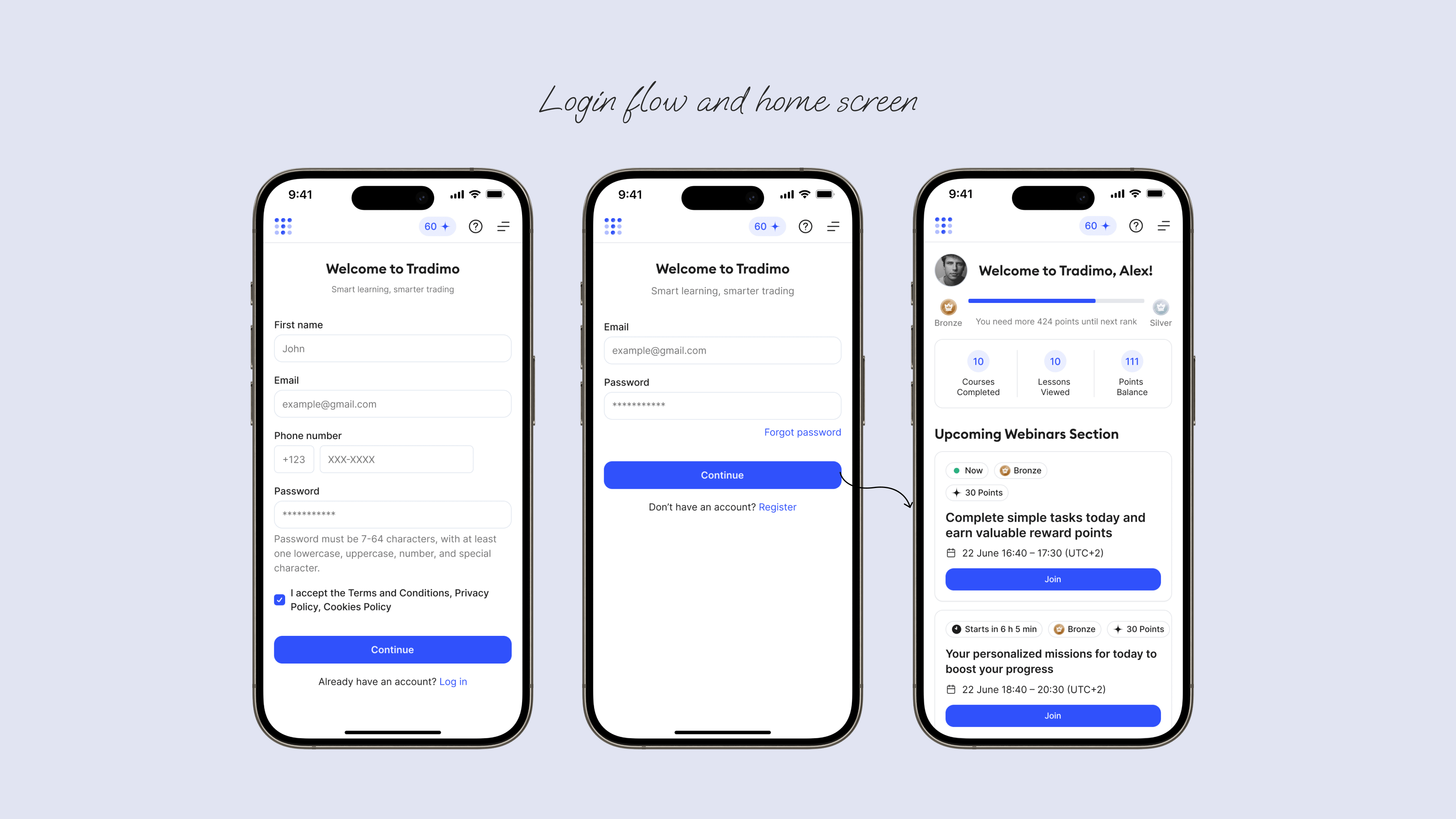
Login flow & home screen
Analytics showed a strong drop-off before the first lesson.
The login and first-entry experience did not give users enough direction after they entered the platform.
I simplified the flow and made the next learning action more visible.
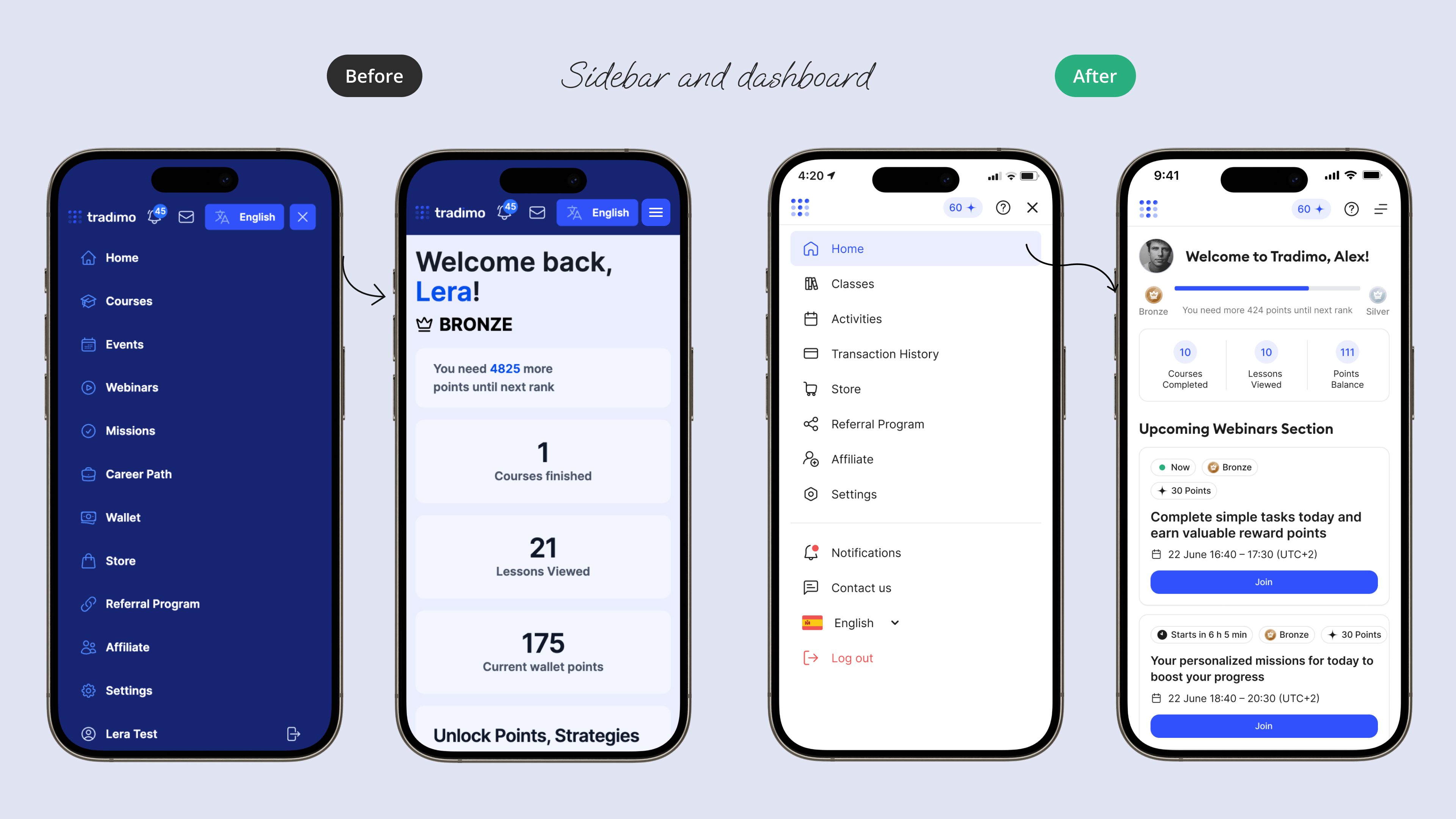
The dashboard and navigation had to work together.
Users needed to quickly understand:
where they were, what they could continue, and where to find the next relevant activity.
I simplified the navigation, reduced repeated paths, and made progress and unfinished learning more visible on the dashboard.
Learners often had to open a course before they could understand whether it was right for them.
The cards did not show enough information for a quick decision.
I redesigned them to surface the details people needed most: level, format, requirements and progress.
.png)
.png)
Learners often had to open a course before they could understand whether it was right for them.
I redesigned the cards to show the most useful information earlier: level, format, requirements and progress.
.png)
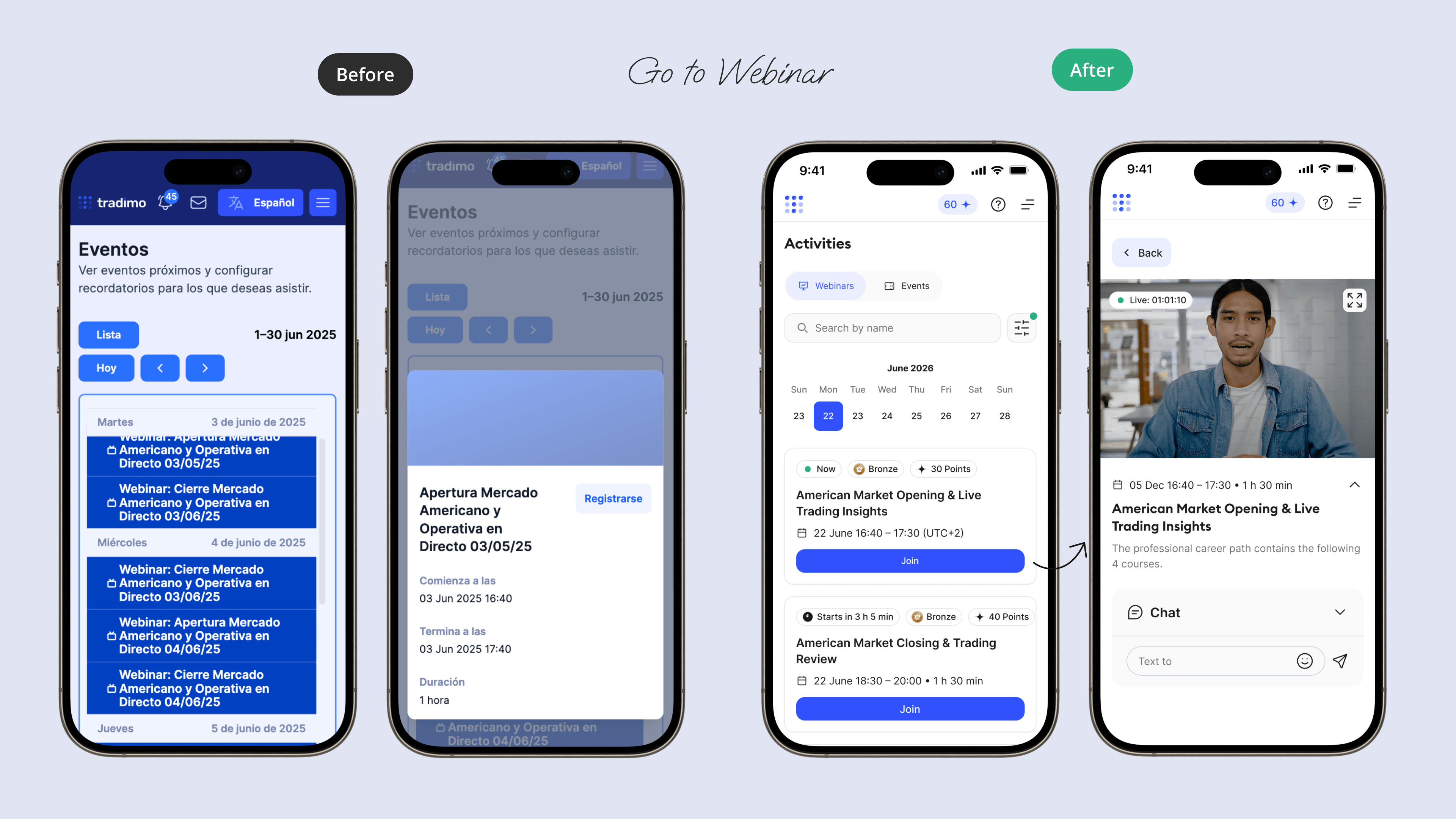
Webinars were important, but upcoming sessions and recordings felt disconnected from the rest of learning.
I brought them into one flow where users could discover a session, join it, set a reminder and return to the recording later.
Tradimo also used coins and referrals to motivate engagement.
Instead of showing rewards everywhere, I connected them to meaningful moments such as progress and completion.
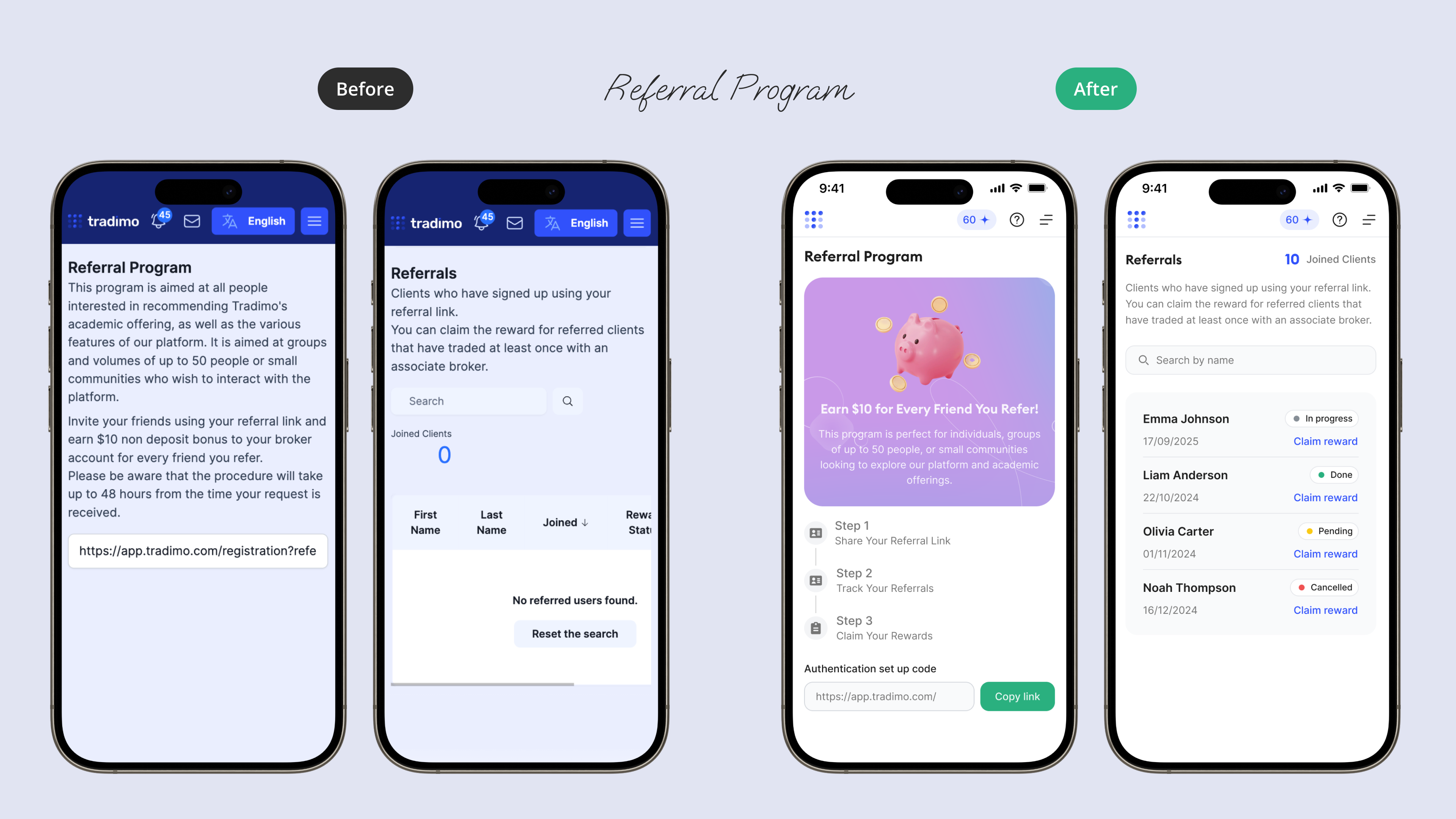
I tested the redesign on desktop and mobile and looked at task success, time on task, navigation errors and where users still needed help.
The tests helped me refine CTA visibility, course information and mobile filters before finalizing the experience.

I also redesigned a broker education landing page.
I simplified the hero, strengthened the main CTA, improved readability and moved important controls closer to the top of the page.
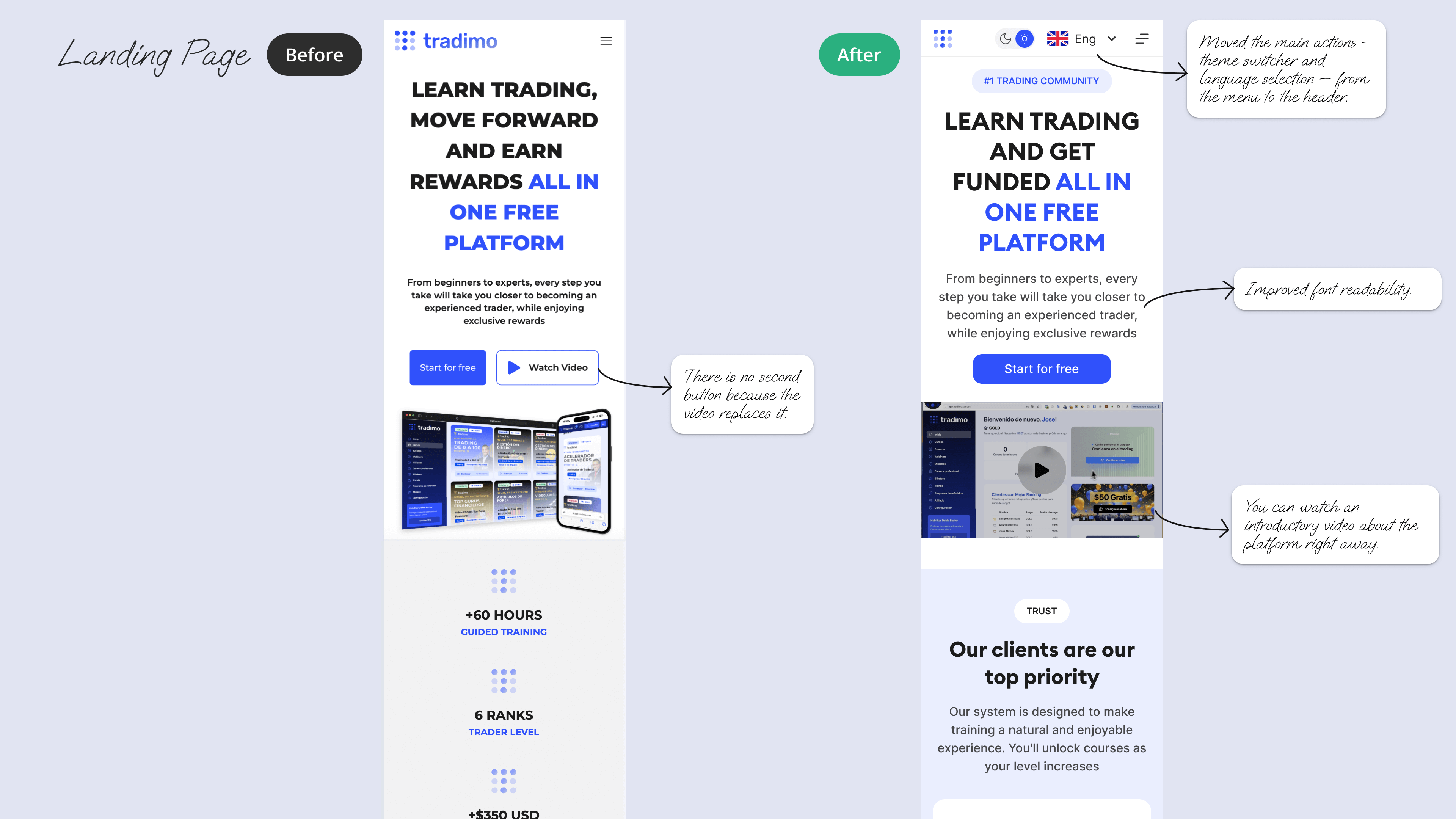
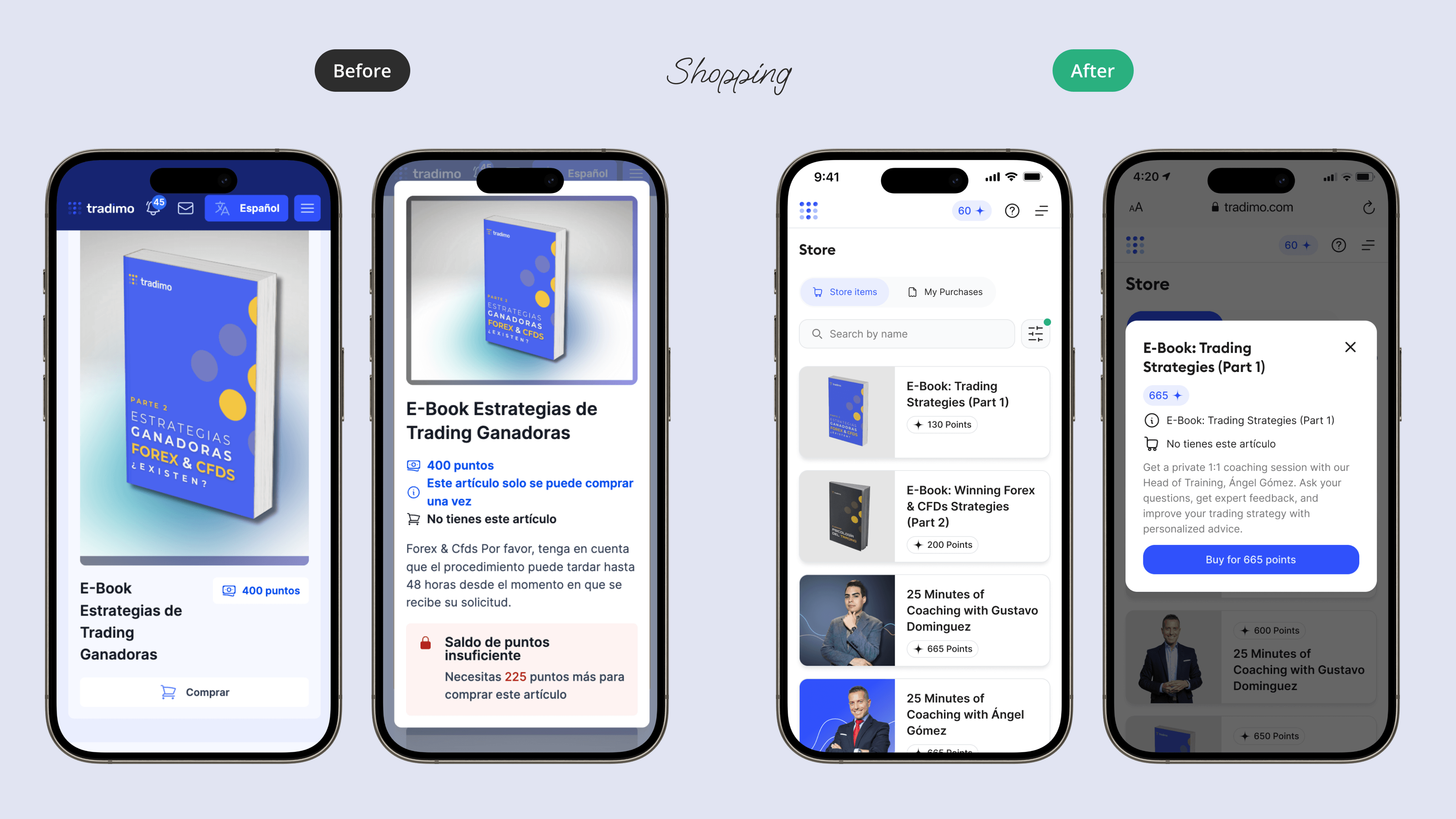
The old purchase experience was spread across several pages.
I replaced it with a searchable catalog and a quick product view that showed the key details, point price, status and a clear Buy action in one place.
This shortened the path to purchase, especially on mobile.
During usability testing, average completion time across selected core journeys decreased by 30%.
The redesign also reduced navigation friction and created more consistent patterns across courses, webinars, rewards and purchase flows.
The biggest improvement did not come from adding more features.
It came from making three things easier to understand:
Where am I? What should I do next? How do I continue?
.png)